Our Why
Our founder started headSTRONG with a simple belief: every athlete deserves to understand the risks of brain injury, and every community deserves the tools to prevent it. headSTRONG exists to form connections through concussion awareness, and we're building teams at every level.
What is a Concussion?
A concussion is a type of traumatic brain injury caused by a bump, blow, or jolt to the head - or by a hit to the body that causes the brain to move rapidly inside the skull (like whiplash). Even "mild" concussions can have serious consequences if not properly recognized and managed.
Who's at risk?
Any athlete in any sport - or recreational activity - can sustain a concussion. High school athletes are especially vulnerable due to developing brains. Contrary to popular belief, female athletes experience concussions at equal or higher rates than males in the same sports.
Gaps in our Law
While all 50 states have concussion laws for youth sports, enforcement and level of care vary widely. Many states lack requirements for adolescent education or standardized return-to-learn protocols. The Georgia Return to Play Act does not formally mandate sit-down education for head injuries like we do for driver's ed or comparable learning. headSTRONG is partnering with our community to ensure that we're aware of the signs and symptoms of traumatic brain injury at a systemic level.
Connection to Mental Health
Concussions don't just affect physical health. Research shows that repeated minor traumatic brain injury (mTBI) can be linked to depression, anxiety, and in some cases, long-term neurodegenerative conditions. Athlete mental well-being is an extremely important reason why educating on the various ways a concussion can manifest is essential.
We build teams to protect
what matters most.
Every year, millions of young athletes risk undiagnosed brain injuries. headSTRONG exists to change that: one school, one team, one athlete at a time.
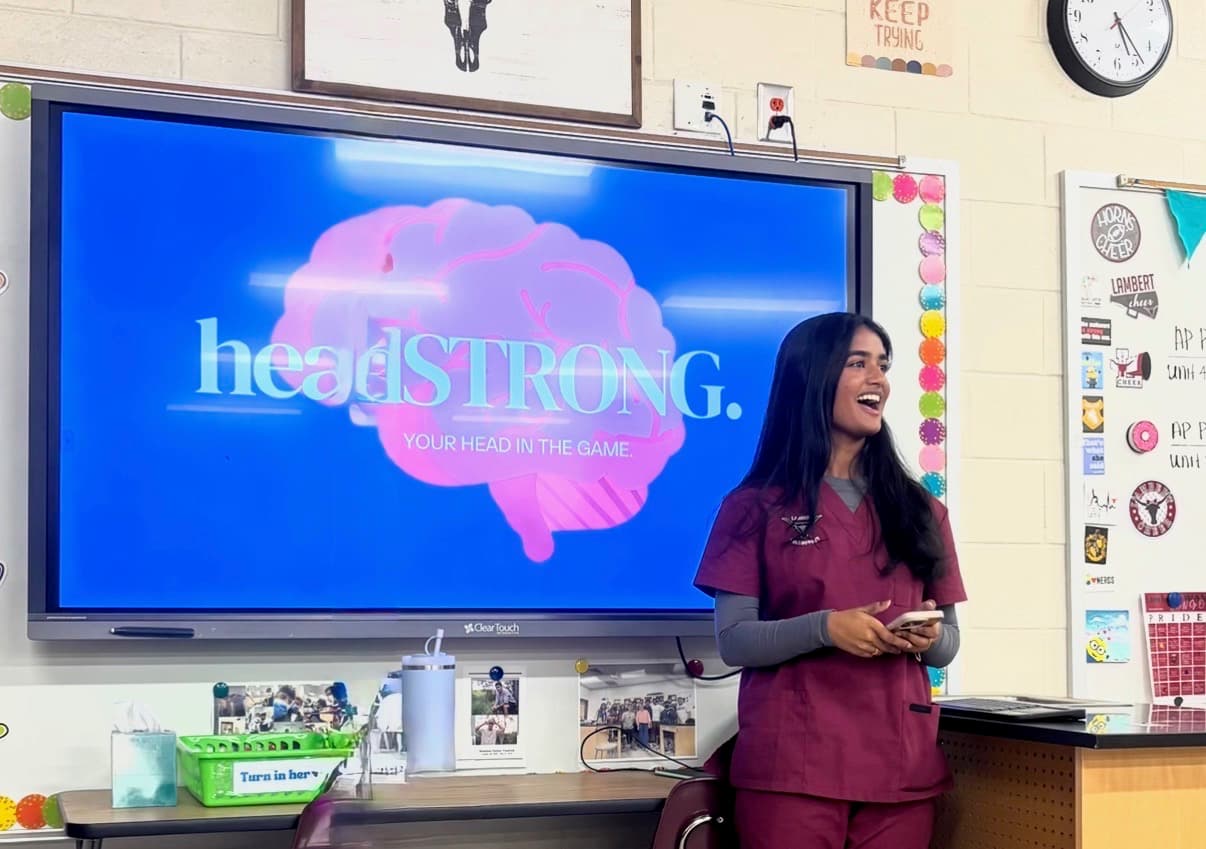
headSTRONG was started with the belief that knowledge is protection. We work directly with high school athletic programs, community organizations, and the general public to integrate concussion education into every aspect of sports culture.
Our programs are designed in partnership with medical professionals and built for real people: athletes who want to compete, coaches who want to protect their players, and parents who want their kids to come home safe.
“"The most important way to start educating about concussions is to start a conversation."”
— Derek Lawrance, DAT, ATC, US Men's Soccer Health Team
How headSTRONG creates change
Three interconnected goals that move the needle on athlete brain health from the locker room to the legislature.
Education
We equip athletes, coaches, and parents with evidence-based knowledge about sign/symptom recognition, prevention protocols, and safe return-to-play guidelines.
Conversation
headSTRONG is committed to breaking the silence around concussion reporting culture. We empower athletes to speak up for themselves - and their fellow teammates - without fear of being benched or stigmatized, because reporting is strength.
Legislation
We are actively involved in driving policy change at school, district, and state levels to mandate player education and standardized concussion protocols across all sports.
Every Sport Deserves Concussion Education
Brain injuries don't discriminate by sport. Here's how headSTRONG commits to awareness in every locker room.
Football
Highest reported concussion rates in contact sports
👥40 athletes educated
Soccer
One of the highest world-wide concussion rates in sport
👥30 athletes educated
Flag Football
Concussions to watch in a fast-developing contact sport
👥19 athletes educated
Basketball
Collisions and hard court falls cause frequent mTBI
👥14 athletes educated
Lacrosse
A high-speed contact sport with significant head injury risk
👥39 athletes educated
Volleyball
Diving and court collisions often go unreported
👥27 athletes educated
Cheerleading
Stunt falls can cause concussions via whiplash
👥49 athletes educated
Wrestling
Head-to-mat and head-to-head contact are everyday occurences
👥14 athletes educated
Baseball / Softball
Pitched ball impact and sliding collisions are uncommon, but happen
👥17 athletes educated
Hockey / Field Hockey
Board collisions and high-velocity checking frequently trigger concussions
👥18 athletes educated
Swimming / Diving
Diving impacts and pool-edge collisions pose hidden risks
👥36 athletes educated
Track & Field / Cross Country
Pole vault, hurdles, and relay collisions can cause head injuries
👥28 athletes educated
Gymnastics
High-impact landings and falls from equipment risk brain injury
👥15 athletes educated
Cricket
Roughly 70% of concussions from helmet strikes aren't diagnosed immediately on the field, leading to delayed recognition
👥51 athletes educated
Archery
Recreational head injuries in all sports are a part of headSTRONG's most important curriculum
👥47 athletes educated